
More Than Lines on a Map: Why Communities Must Own Their Own Stories.
Raw reflections from Mathare and Malawi’s informal settlements on community mapping, youth power, and putting data back into the hands of the people who live it.
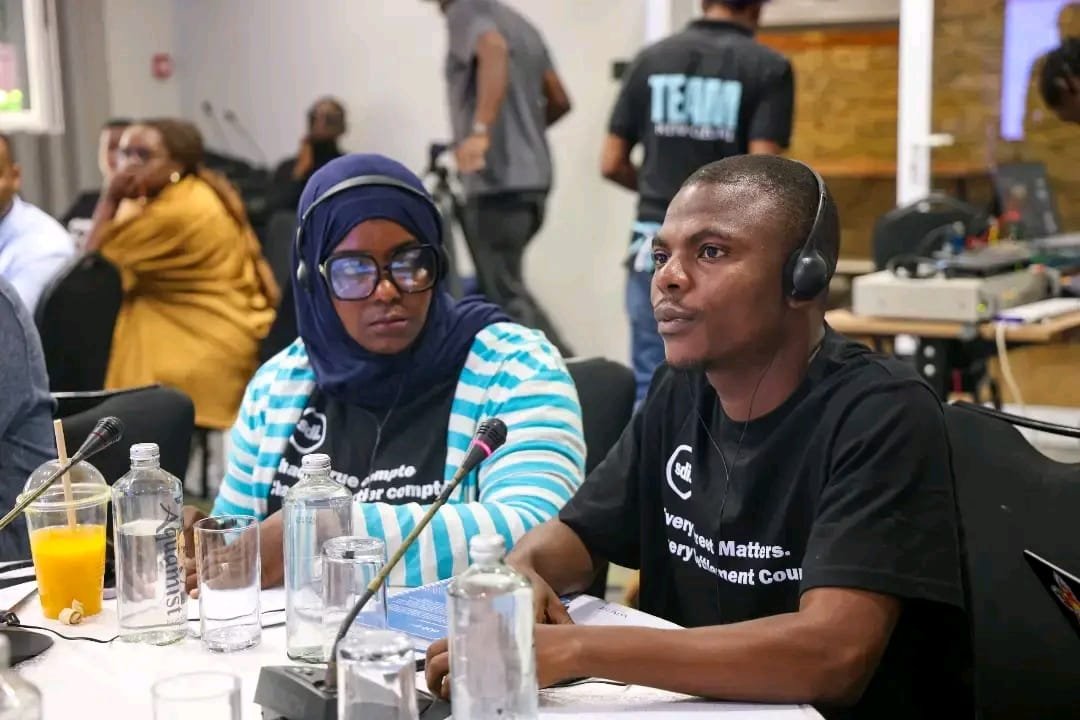
Inside the climate-controlled rooms of the KYC 2.0 Taskforce Workshop in Nairobi, we immersed ourselves in cutting-edge mapping tools and complex data analytics. We analyzed spatial patterns, charted boundaries, and built detailed visualizations of informal settlements.
However, our true wake-up call came when we stepped onto the ground in Mathare.
Standing amidst the heartbeat of the community, an undeniable truth confronted us: you can collect mountains of data and plot millions of GPS points, yet still miss the neighborhood’s human soul.
A satellite easily marks a road, a roof, or a public tap. It cannot capture how a mother navigates a flooded alley at midnight, nor can it depict daily struggles or local resilience. Outside observers cannot tell these stories. The community itself must hold the pen.
Ultimately, Mathare proved that authentic mapping is not an extractive exercise. It is a radical act of listening, deep solidarity, and community ownership.
Seeing Mathare Beyond the Map
Mathare is one of Nairobi’s largest and most vibrant informal settlements. Walking its narrow pathways, we witnessed extraordinary ingenuity driven directly by local residents and passionate young leaders.
At Mathare Park, residents described fighting to reclaim and restore the river ecosystem along Hospital Road. A few streets away, youth-led teams organized waste clearing, sanitation drives, and neighborhood cleanups with tireless dedication.
Meanwhile, at the Resilient Hub, young people turned digital tools into instruments of change. Backed by the SDI III Impact Innovation Initiative, residents have mapped their needs and built community toilets, establishing vital services where municipal support fell short.
These grassroots initiatives address core daily needs. Whether facing environmental hazards or tackling basic sanitation, residents are actively improving their reality.
This field visit shattered a common myth: informal settlements are not passive victims waiting for outside experts to diagnose their challenges. The internal expertise and hunger for change already exist. Mapping simply amplifies that wisdom.
When residents document their own streets, they reveal essential truths standard top-down surveys overlook—such as actual safety risks, service usage, and historical memory of the land.
Crucially, community engagement cannot end when data collection finishes. The people who share their lives through data deserve total ownership of the final insights and the decisive voice in how those findings are used.
Youth Are Leaders, Not Just Data Collectors
The energy of young people in Mathare was unmistakable. Youth groups are not merely assisting; they are leading, mastering spatial mapping, and addressing systemic inequalities.
During our visit, we met Moda, a beneficiary of the SDI III Impact Innovation Initiative. He shared how mapping shifted his perspective from feeling trapped by community challenges to actively driving solutions. Standing shoulder to shoulder with him, our youth representatives under the SDI III Impact Innovation Initiative, George Kabula and Ekari Maluwa, demonstrated what happens when young leaders’ own data collection and interpretation. Their participation showed how young leaders from the informal settlements of Malawi connect with peers in Mathare trading strategies on ground-truthing spatial data, navigating settlement dynamics, and using digital mapping tools to illuminate shared urban struggles.
Such experiences highlight a key insight: equipping young people with mapping technologies builds technical skills, critical consciousness, and political agency.
Yet an important question remains: what happens after the data is gathered?
Too many development projects exploit youth as low-cost enumerators. They equip them with smartphones to capture data points in the field, then exclude them from decision-making rooms.
This extractive approach must stop. Young leaders deserve equal seats at the strategy table to analyze datasets, author narratives, and co-design policies that govern their futures.
Building analytical capacity requires sustained digital access, mentorship, and institutional trust. As Mathare demonstrated, youth power reaches its potential when young people serve as leaders from inception through policy design.
From Data Points to Real World Power
Throughout our workshop sessions, we returned to a core question: how do we prevent data from remaining unused and instead drive transformative action?
We examined several technical innovations. Luis presented City Maps Plus, showing how 3D spatial models bring dense settlement realities into focus. Shoaib introduced the Data Lake platform, illustrating how countries can centralize scattered datasets into strategic knowledge products.
Collecting data is simple; turning data into justice requires relentless commitment.
Without analysis and advocacy, data remains dormant. A map can mark fifty toilet blocks, but resident voices reveal if forty are locked, unsafe, or unaffordable.
While technology highlights spatial patterns, lived experience explains the context. We must translate raw figures into accessible visual stories, infographics, and community summaries that residents can use when engaging government officials.
As emerging technologies like Artificial Intelligence enter mapping, local governance remains essential. High-tech algorithms must support human dignity rather than replace local narratives.
In addition, community data requires strict ethical oversight. Poorly managed data can expose vulnerable communities to displacement or criminalization. Consent, privacy, and community-controlled governance are indispensable safeguards.
Reflections for Malawi: Turning Inspiration into Impact
Reflecting on these experiences, I continually considered Malawi particularly the informal settlements of Blantyre and beyond, where families navigate similar structural challenges daily.
Malawi has established a strong foundation, mobilizing over 278 young people and training nearly 150 data champions. Training provides the initial momentum; now we must sustain and expand that effort.
We must finalize our community analysis, bridge sector silos, and design solutions tailored to local realities. Our trained youth champions in Malawi have demonstrated technical skill; we must now support them financially, politically, and morally to lead advocacy.
By leveraging platforms like the Data Lake, we can share the stories behind our data, empowering youth champions across Malawi to hold decision-makers accountable.
Honoring Mathare’s example does not mean copying Kenya’s approach directly. Each settlement in Malawi possesses its own history, challenges, and context.
While families in the informal settlements of Malawi face economic and environmental burdens, they also bring grassroots wisdom, youth energy, and social cohesion. Equipped with digital tools and support, our communities can transform their neighborhoods.
To turn these reflections into concrete action in Malawi, we commit to three bold, non-negotiable priorities:
- Full-Cycle Youth Empowerment: Shatter the ceiling that limits youth to field enumerators. Support them fully as data analysts, storytellers, strategic planners, and political leaders.
- Mandatory Community Feedback Loops: Guarantee that data collected from informal settlements in Malawi returns directly to the residents first, giving them full power to validate, interpret, and drive local action.
- Action-Oriented Advocacy Tools: Convert dense spatial datasets into compelling, human-centered knowledge products that fuel grassroots advocacy and demand equitable urban investments.
Path Forward
A workshop serves as a catalyst, but the core work lies in supporting local residents to own their data and lead change.
Maps provide coordinates, boundaries, and spatial structure. However, digital points and satellite imagery cannot represent human hope, dignity, or perseverance.
Lived community experiences bring meaning to data. When we return data control to residents, mapping achieves its true goal: advancing justice, dignity, and community leadership across informal settlements.
A map is only the beginning. What truly matters is what we do with the truth it reveals and ensuring the people whose lives are on that map hold the ultimate power over what happens next.
Author


