
Unlocking Urban Growth: CCODE Signs Landmark MOU with Government to Deliver Affordable Housing in Informal Settlements
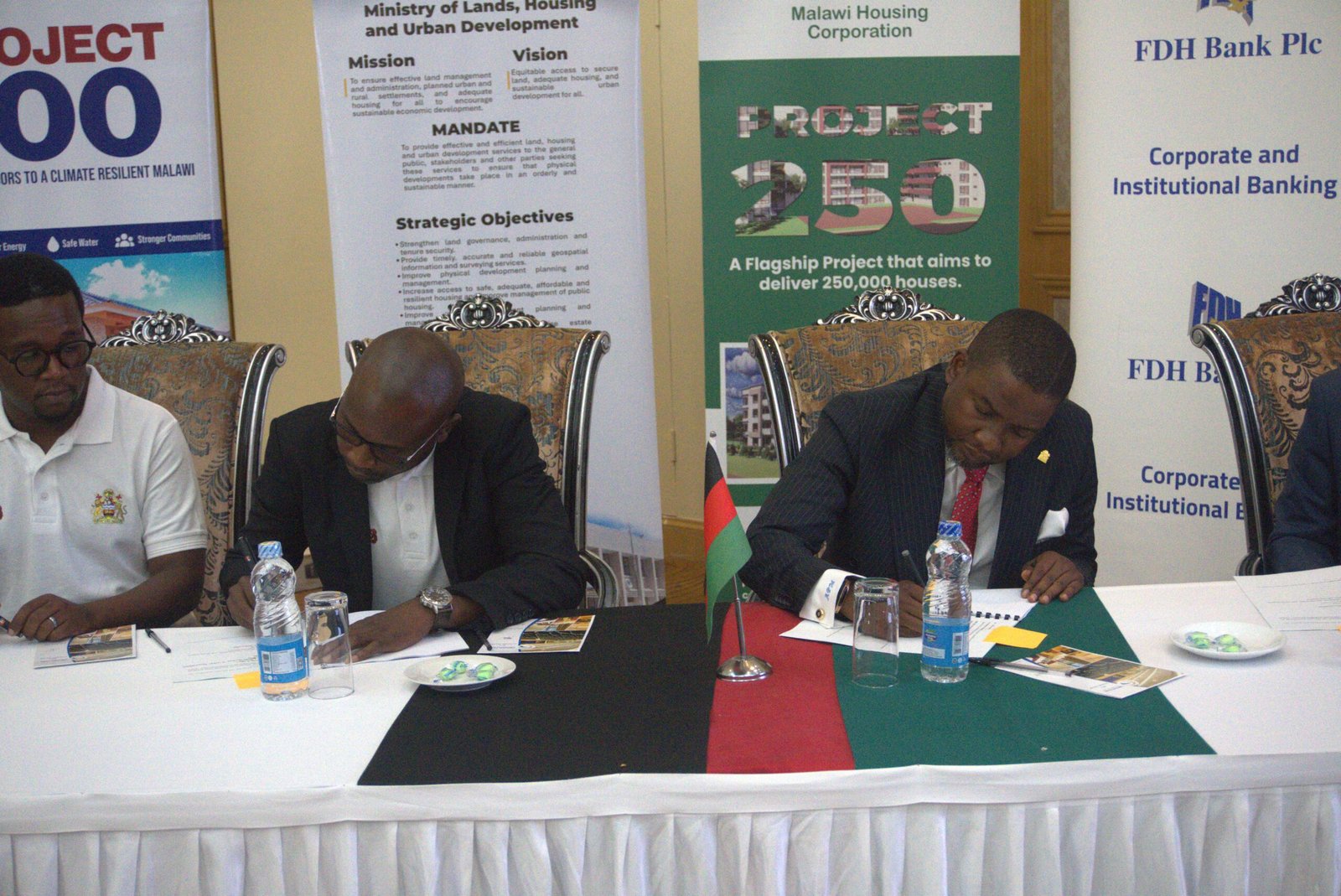
LILONGWE, MALAWI — In a decisive step toward resolving Malawi’s urban housing crisis, the Centre for Community Organisation and Development (CCODE) signed a landmark Memorandum of Understanding (MOU) directly with the Government of Malawi, through the Ministry of Lands, Housing and Urban Development.
Government announced the strategic agreement during a multi-stakeholder workshop at the Bingu International Convention Centre (BICC). The Minister of Lands, Housing and Urban Development, Hon. Chimwemwe Chipungu, MP, attended the event alongside key partner organizations including the Malawi Housing Corporation (MHC), Habitat for Humanity Malawi, and FDH Bank Limited who witnessed the signing.
This dynamic alliance establishes a clear pathway for joint settlement planning, participatory slum upgrading, and scalable housing delivery for low-income families in informal settlements.
Tackling the National Housing Deficit
Malawi faces an urgent urban housing shortage exceeding 1.5 million units. Today, over 75% of urban residents live in informal settlements across major cities like Lilongwe, Blantyre, and Mzuzu.
Rapid urbanisation, high construction costs, and limited financial access continue to block low-income families from secure land tenure.
The new MOU directly addresses these bottlenecks. By combining public resources with community-led models like the Tamanga Housing Cooperative and the Community Housing Fund, the alliance delivers practical pathways to homeownership.
Unlocking Capital: Project 250
A central pillar of this effort is the Malawi Housing Corporation’s Project 250, an ambitious initiative targeting 250,000 homes over the next decade.
Under Phase 1 of Project 250, FDH Bank will finance the construction of more than 10,000 homes starting in November 2026.
“FDH Bank is financing over 10,000 houses in the first phase, with construction expected to begin in November 2026, subject to logistical arrangements,” stated MHC Chief Executive Officer Bob Chimkango during the announcement.
The initiative deploys innovative financial tools, including flexible micro-mortgages, rent-to-own schemes, and community savings products tailored for low-income households.
Positioning Communities at the Heart of Development
For CCODE, effective housing initiatives must stem from active community participation and co-development.
CCODE mobilises informal settlement dwellers, ensures their voices shape urban planning, and upgrades basic infrastructure such as sanitation, clean water, and access roads.
“Through meaningful community engagement, housing programmes can better address local priorities, including access to water, sanitation, drainage, roads, and other essential services,” highlighted Mr. Zilire Luka, Executive Director of CCODE.
This grassroots approach ensures urban development translates into safer neighbourhoods, healthier families, and expanded economic opportunities.
Building Climate-Resilient Cities for MW2063
With extreme weather events impacting Malawi, the partnership prioritises eco-friendly building techniques, local materials, and climate-resilient designs.
These green construction methods reduce vulnerability to environmental hazards while keeping housing durable and affordable.
Aligning with the MW2063 vision, CCODE and its partners are building the foundation for sustainable urban transformation, inclusive economic growth, and human dignity across Malawi.

