
In the Shadow of Rent, a Home Emerges: The Tamanga Story
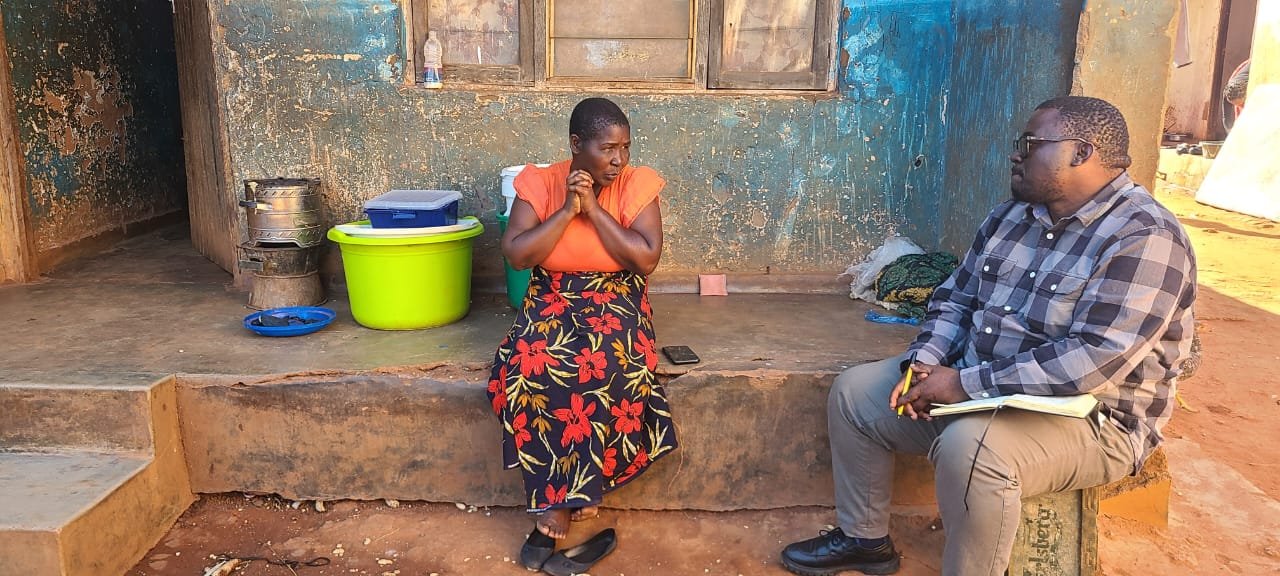
Ligineti Khembo Bande is 49 years old. For more than two decades, she has lived as a tenant in Chinsapo, on the edge of Lilongwe-a place where survival is negotiated daily, and dreams are often deferred.
Her journey to the city began in 1998. She had travelled from Nsanje to visit her parents, who were living in a small boy’s quarter tucked within the compound of her father’s employer in Area 9-one of Lilongwe’s most affluent neighbourhoods. Her father worked as a tailor for an Asian businessman. The contrast was stark: wealth on one side of the wall, precarity on the other.
At the time, Ligineti was still in Nsanje, caring for a sick aunt, raising her six-year-old child, and living with her husband. But something shifted during that visit. She saw possibility in Lilongwe-work, income, a future that felt just within reach.
She returned home with a conviction and persuaded her husband to follow her to what many called the “city of dreams.”
They started again in the same boy’s quarter, before moving out to Chinsapo-drawn by affordability and proximity to opportunity. At the time, they found a house for MK350.
But Malawi itself was changing.
The country is urbanising rapidly, with cities growing at over 5% annually and urban populations now approaching one-fifth of the total population. What this means in reality is what Ligineti has lived: more people chasing limited housing, rising rents, and deepening inequality in urban spaces.
In those early years, she survived through informal trade-selling firewood and charcoal. Her husband’s fortunes changed when, while walking through town, he saw a vacancy sign at the Malawi College of Distance Education. He applied immediately-and got the job. It was a different time, she recalls, when opportunity felt closer.
But time has rewritten that promise.
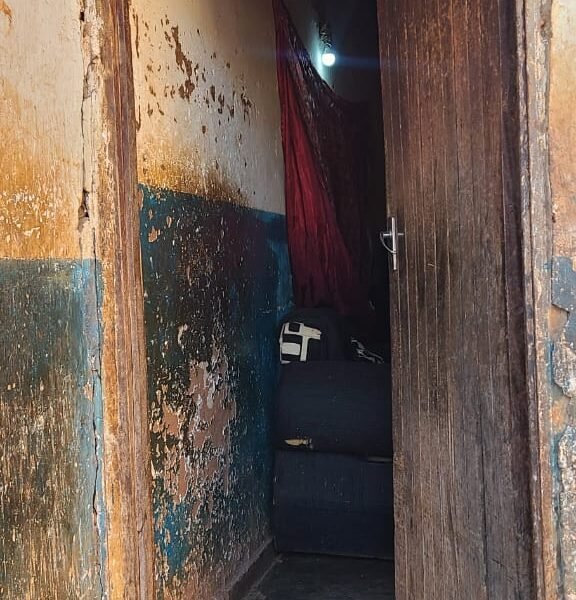
Today, Ligineti still lives in Chinsapo. The rent has climbed to MK85,000 per month-far beyond the pace of income growth. The house is cramped, dim, and deteriorating. Electricity must stay on even during the day. The toilet is a broken pit latrine. The bathroom is just stones underfoot with an old-rugged cloth serving as a door. When it rains, the smell of earth seeps into the house, and the floor turns cold beneath her feet. The pit latrine fills quickly, and at night, every step outside is taken carefully, guided by memory more than light.
Yet she pays rent-on time. Always.
Her reality is not just about housing. It is about pressure.
Malawi has one of the highest dependency burdens in the world. Today, there are roughly 76 dependents for every 100 working-age people, meaning each working adult carries the weight of extended families, children, and the elderly. This is Ligineti’s life: three children, two grandchildren, and relatives back in the village, some orphaned, all needing support.
“It is hard to chase the dream of owning a house,” she says, “when you are also chasing a child’s dream to go to school.” She has learned to measure life in sacrifices: rent paid instead of savings, school fees instead of bricks, survival instead of stability.
For years, that dream remained distant.
Then, in 2024, she joined the Tamanga Housing Cooperative, supported by Centre for Community Organisation and Development (CCODE).
“When I heard about it,” she says, “I told my husband. He said: This is our chance.”
Through the cooperative, she has secured a plot-financed through a loan she has since paid off. Now, she continues to buy shares monthly, preparing to qualify for a housing loan.
“We are not giving up,” she says. “We will get there.” Every month, contributing to the cooperative is a decision weighed against everything else: food, school fees, emergencies. One missed payment could set her back. But stopping now would mean returning to a life she is determined to leave behind.
For Zilire Luka, the Executive Director of CCODE, Ligineti’s story is not an exception-it is the point.
“This model is about shifting power,” Luka says. “For too long, the urban poor have been locked out of land, finance, and planning systems. They have been tenants in structures they do not control-economically and socially. The Tamanga Housing Cooperative changes that.”
He leans into structural reality. “Urbanisation in Malawi is accelerating, but housing systems have not kept pace. What you see in places like Chinsapo is not just poverty-it is exclusion. The cooperative is a deliberate intervention to shift power back to communities, so they can organise, finance, and build their own solutions.”
And it is not charity.
“We are not managing poverty,” Luka adds. “We are dismantling the conditions that reproduce it. When communities pool their resources, access land, and build incrementally, they are not just constructing houses-they are constructing agency, dignity, and economic power.”
The model is designed to scale-because the crisis itself is not small.
Supported by DESWOS, Germany’s Federal Ministry for Economic Cooperation and Development, and the Tilitonse Foundation, the cooperative is expanding to reach more communities and strengthen grassroots governance.
For Ligineti, this is no longer an abstract policy. It is personal.
One day, she says, she will sit on the veranda of her own house not as a tenant, but as an owner. The light will fall differently then. Not borrowed. Not temporary. Hers.
And in that moment, the story of urban struggle will turn into a story of power reclaimed brick by brick.

