
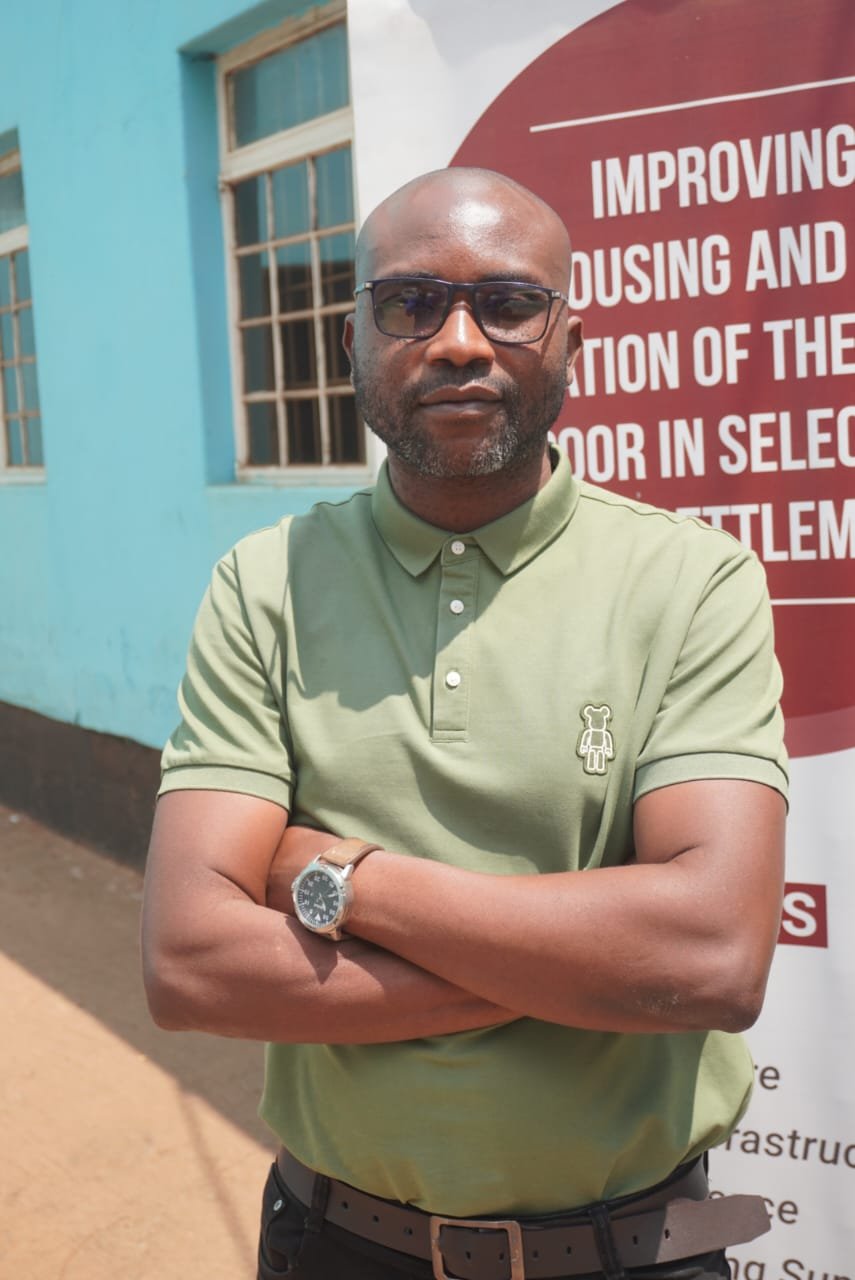
From Partnership to People-Centered Housing: How CCODE and DESWOS Helped Build New Pathways for the Urban Poor in Malawi
Housing sector. A conversation with Zilire Luka on the partnership between Centre for Community Organization and Development and DESWOS, and the lessons shaping community-led housing in Malawi.
Sometimes projects end with reports.
Other times, they leave behind systems, partnerships, institutions, and communities that continue evolving long after the funding cycle closes.
For the Centre for Community Organisation and Development (CCODE), the partnership with DESWOS became more than a housing intervention. Over the years, the collaboration evolved into a platform for testing community-led housing solutions, strengthening sanitation systems, supporting technical skills development, and exploring alternative financing models for low-income urban communities.
The partnership between CCODE and DESWOS began through sanitation and community development initiatives focused on improving living conditions for vulnerable households. Together, the two organisations implemented WASH-related interventions that included the construction of more than 750 Ecosan toilets, the establishment of a composting facility in Mulanje and Blantyre, and sanitation infrastructure at two schools in Mulanje. The partnership also supported the training of Ecosan builders and led hygiene awareness campaigns during the COVID-19 pandemic, helping communities strengthen public health practices during a critical period.
Building on those experiences, the organisations later expanded their collaboration into housing and technical skills development, recognising that housing challenges in Malawi’s urban informal settlements are deeply connected to poverty, unemployment, insecure land tenure, and limited access to affordable financing.
Today, Malawi’s cities continue to experience rapid urbanisation. As more people migrate to urban areas in search of opportunities, the demand for affordable housing continues to grow, particularly in informal settlements where most low-income families live as tenants under difficult conditions. Rising construction costs, limited access to mortgages, and insecure incomes have pushed many urban poor households out of conventional housing systems.
In response, communities are increasingly coming together to explore collective savings, cooperatives, and community-driven financing mechanisms as alternatives for accessing land and decent housing. Within this process, CCODE has continued to play an important role not only as an implementer, but also as an integrator and mediator bringing together communities, local authorities, training institutions, financial systems, and development partners to collectively address urban housing challenges.
Q. WHAT WERE YOUR MAJOR HIGHLIGHTS ON THIS PROJECT: Improving the Housing and Income Situation of Particularly Vulnerable Population Groups Using the Example of Selected Slum Areas in the Capital Lilongwe.
One of the remarkable things about this project is that it achieved outcomes we had not originally planned for.
The organisation was not initially set to establish a housing cooperative, we only had an idea of a housing association of some sort, but through the process, we ended up creating what became the first-ever housing cooperative specifically targeting the urban poor. That alone was a major milestone.
Even more importantly, by the end of the project, the cooperative had managed to acquire and officially register its land. That was a significant achievement because land ownership remains one of the biggest barriers for low-income urban communities.
Another major highlight was the relationship that emerged with training institutions. Through the project, we began building practical collaborations around technical skills development and housing support. There are still many lessons to unpack from that relationship, and moving forward, there is a strong need to formalise it further, especially through mechanisms like signing a Memorandum of Understanding (MOU).
The project showed us that when communities, institutions, and organisations work together, housing becomes more than shelter; it becomes a pathway to dignity, skills, and long-term security.
Q: What factors led to the inception of this project, and what inspired its direction?
Our partnership with DESWOS did not begin with this project.
We had previously worked with DESWOS on household sanitation initiatives. Together, we constructed 30 Ecosan toilets in Mulanje, and that collaboration later expanded into Blantyre under another phase of work.
But this particular project was different.
It was designed as a pilot initiative to deepen understanding around housing and technical skills development. At the same time, it aimed to bridge gaps among stakeholders within the
One of the strongest outcomes was the network that began to form around housing issues bringing together communities, institutions, and different actors who often operate separately. The project created space for collaboration, experimentation, and learning.
In many ways, it became a contribution not just to housing delivery, but to knowledge and systems-building within the sector itself.
Q: One of the improvements was around loan repayments. What did the organisation do differently?
Interestingly, improved loan repayments were not an intended outcome at the beginning of the project.
But once we started seeing positive results, we embraced the opportunity fully.
The project allowed us to experiment with different models for strengthening loan systems within the federation. One of the most important changes was repositioning the federation itself at the centre of the vetting process.
Instead of the organisation directly controlling the system, the federation became the primary driver of decision-making, while the organisation shifted into more of a supportive role contributing to the Mchenga Fund rather than managing every process.
That change created stronger ownership and accountability within the communities themselves.
What we learned is that sustainable systems often work better when communities are trusted not just as beneficiaries, but as decision-makers. And in this case, that shift played a key role in improving repayment performance and strengthening the overall system.

