
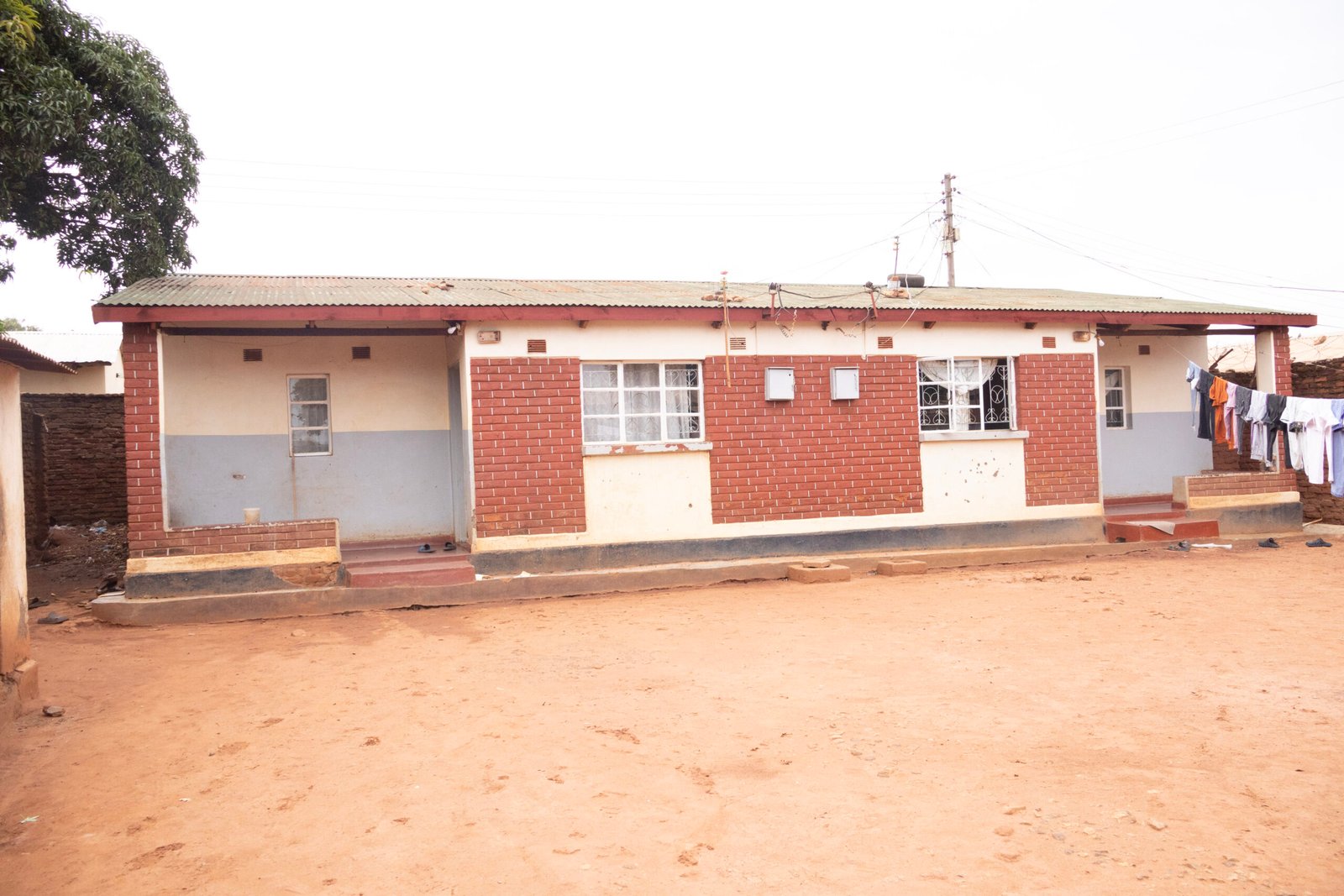
Building Dreams and Plastering Pride: How Home Improvement Loans Transform Lives in Malawi
In 2011, Royce Issah joined the Federation of the Rural and Urban Poor in the informal settlement of Chinsapo, Lilongwe, driven by a deep desire to transform her family’s future. A devoted mother of eight boys and two girls, though she carries the quiet grief of losing one daughter, Royce works tirelessly as an active tomato seller. Managing a large household amidst pressing financial challenges, she discovered far more than a traditional savings group; she found a resilient network anchored in shared hope, financial solidarity, and collective strength.
Driven by her sharp entrepreneurial spirit, Royce saved regularly through her local group. When her family urgently needed safer and more dignified shelter, she partnered with her husband to access a home improvement loan supported by the Centre for Community Organisation and Development (CCODE). Royce secured flexible financing in two distinct phases: an initial loan of 400,000 Kwacha, followed by a second phase of 1 million Kwacha. This structured, incremental capital deployment demonstrates how grassroots microfinance can effectively bridge the gap for low-income households that standard commercial banks routinely overlook.
Using these funds, Royce plastered and completely renovated her rental home, turning an insecure structure into a comfortable, weather-resistant sanctuary. “I used to have sleepless nights,” Royce shares with a radiant smile. “For this house, it is my pride that is now fixed.” Her personal victory underscores a broader truth: housing loans do more than patch up walls; they restore dignity, safety, and psychological security. The Federation Home Improvement Programme acts as a vital revolving housing finance mechanism, empowering low-income families across Malawi to expand living spaces, reinforce structural integrity, and install essential sanitation facilities.
Beyond shelter, CCODE and the Federation cultivate long-term self-reliance by providing practical vocational skills, including tailored workshops in tailoring and leather-making. Royce eagerly attended a hands-on training where she mastered crafting high-quality leather sandals. “Out of 60 participants in our sandal training class, only 6 of us successfully ventured into the business,” Royce recalls, reflecting on the perseverance required to turn skill into sustenance. “Back then, we sold each pair for 6,000 Kwacha; today, those exact same handcrafted sandals fetch 18,000 Kwacha.” Although family responsibilities temporarily paused her enterprise, these versatile market skills continue to boost her confidence and financial independence.
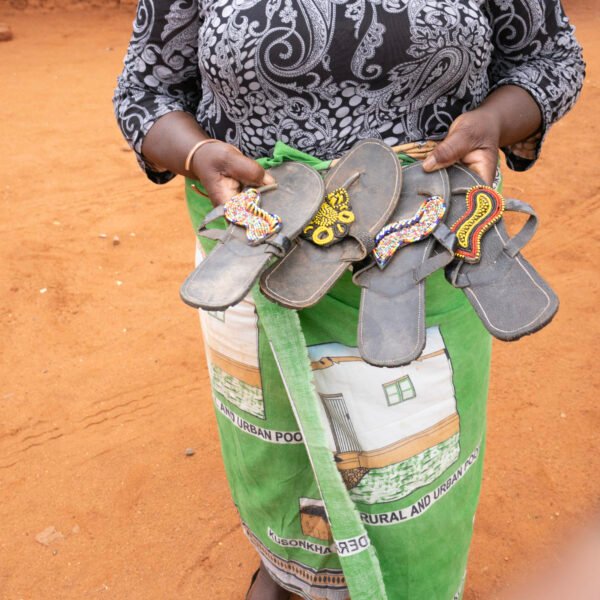
Royce showing some of her old sandals that she made.
Ultimately, Royce’s journey illustrates the profound multiplier effect of community-led development. By pairing accessible micro-housing loans with market-relevant technical training, CCODE enables women to upgrade their living conditions, buffer their families against economic shocks, and pave a sustainable path toward lasting resilience in Malawi’s informal settlements.
