
From Neglect to Action: Communities Leading Ecosystem Restoration in Malawi
Challenges within communities are often overlooked or under-prioritized, largely because those responsible for planning and implementing development interventions lack a clear, lived understanding of the realities on the ground. Without direct exposure, it becomes difficult to grasp the urgency and scale of these challenges. To bridge this gap, CCODE, together with federation members and community leaders, conducted community degradation assessment exercises to identify and document key areas of concern and propose solutions to the problems.
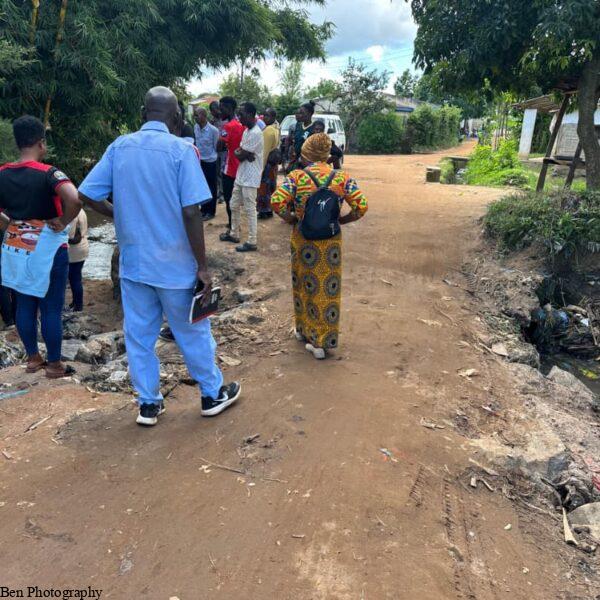
“Our children are at risk; this bridge gets flooded each and every year” laments a concerned community member. This is just one of the many concerns that the climate prone communities have. In the world of constant climate change living becomes unbalanced for many informal settlements. This is a main bridge in the ching’ambo that hundreds pass to their daily activities, children heading to Northgate and Chiputula primary schools. Promises from the politicians have never made it better but instead howled anger in the community members. When the community speaks, who listens?
For years, residents have watched promises come and go, with little to show for it. But now, a new initiative is offering something different. These are not solutions imposed from outside, but ones shaped by the community itself. “Locally-managed Finance for Urban Ecosystem Restoration Catalyzing Community-led Action by Slum Dwellers in Southern Africa” project, Malawi among the chosen implementing Pan African countries. REDAA in collaboration with Centre for Community Organization and Development (CCODE) in Malawi, will implement this project in two cities, Lilongwe and Mzuzu. In Lilongwe, the project will be carried out in two informal settlements of Mtandile and Kawale while in Mzuzu, it will be carried out in Ching’ambo and Salisbury Lines.
Community at the centre of it all
In many cases the community is put as the recipients of development and there is high chance that the community neglects these developments. This project clearly emphasizes ‘community at the center for sustainable ecosystem solutions.’ CCODE in adherence to that stance, conducted community engaging meetings with community leaders in the four settlements. In attendance were youth leaders recognizing that the youth have to have a seat at early stages of planning in the development process. Block leaders, representatives of ward development and disaster committees, federation leaders and CCODE staff. The meeting consisted of 15 community members in each settlement.
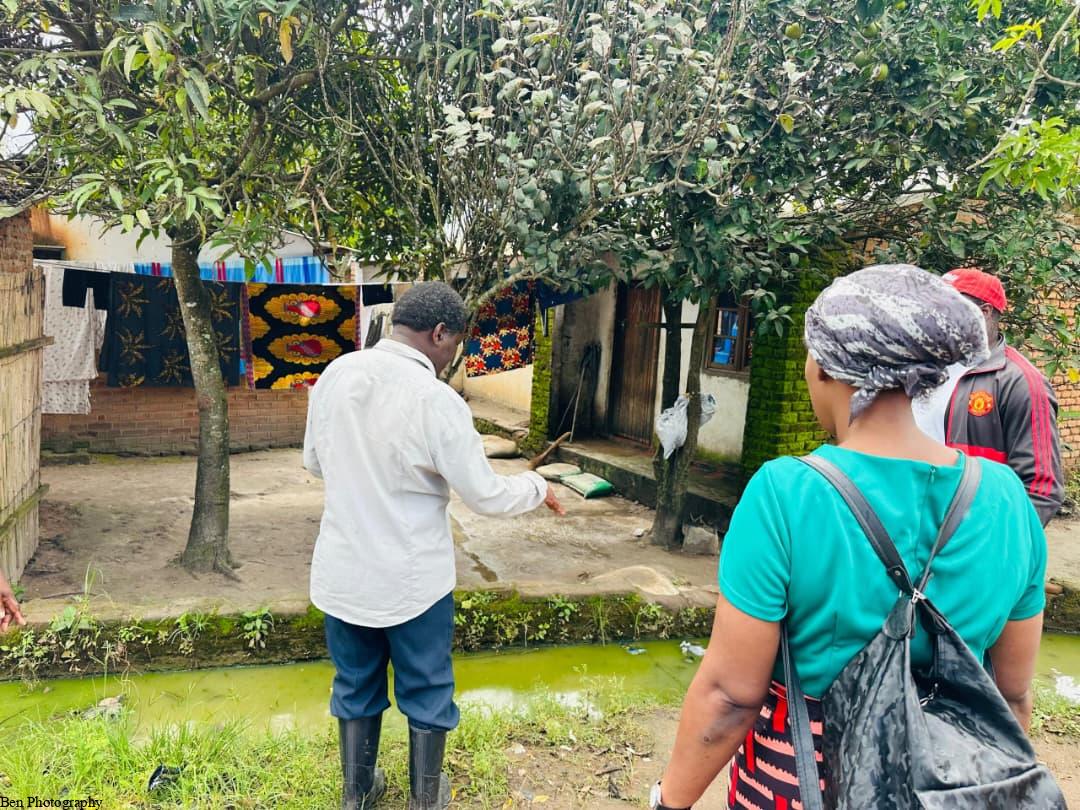
“Our drainages are poor, you need a pair of boots to move around our community because it is a swamp,” a community leader of Salisbury lines expressing whole heartedly. The poor drainage has affected our roads; cars have difficulty in moving in our area during the rainy season because they are slippery, the leader clarified. “Not only that but we have heap of waste with nowhere to dispose, such that people made a way on the heap as a shortcut to town.” He finalized in the meeting.
The aim of the meetings was for the community to voice out about the critical challenges faced and effective solutions because this project recognizes that the community know their priorities and would use the resources given to them effectively. Ownership comes when people have sweated for development. It is a key driver of sustainability of development.
“If we planted bamboo trees along the Katoto stream, it would help reduce the flooding of the stream, we would introduce bylaws so that the trees are protected” youth leader suggested.
Into the field: Where Community Realities Speak
Challenges within communities are often overlooked or under-prioritized, largely because those responsible for planning and implementing development interventions lack a clear, lived understanding of the realities on the ground. Without direct exposure, it becomes difficult to grasp the urgency and scale of these challenges.
What emerged was a stark and unsettling picture. Stagnant, polluted water lay in open spaces- posing a serious public health risk as a breeding ground for waterborne diseases such as cholera, while also creating ideal conditions for mosquitoes that spread malaria. Bridges that are barely passable during the rainy season. Culverts that break year in year out. The situation is further worsened by poorly managed waste sites encountered along the way, compounding both environmental and health hazards.
Amid these challenges, community members demonstrated not only awareness but also vision. “If this place can be cleared, we would like to build shops because it is an industrious area,” one woman explained, highlighting both the problem and a potential pathway toward local economic transformation.
CCODE, federation members together with the community leaders went to identify the key areas affected. A look at the stagnant filthy water that would bring forth water-borne diseases such Cholera and a comfortable breeding site for mosquitos that cause Malaria, was terrifying. The waste sites did not make it any better on this transit walk. “If this place can be cleared, we would like to build shops because it is an industrious place.” Lady explains.
The leaders elaborated on how they have so many challenges but because they lack the financial muscle to fix them be it expanding and building bigger drains and even fix the road networks. For many residents, government mechanisms like the Constituency Development Fund (CDF) meant to support local development have done little to address such urgent needs. The Constituency Development Fund (CDF) in Malawi is a government allocation given to each constituency to support small-scale community development projects such as schools, boreholes, and local infrastructure. It is intended to bring development closer to the people by addressing grassroots needs.
However, the fund is often heavily politicized. Members of Parliament (MPs) tend to exert strong influence over how the money is used, turning it into a tool for political gain rather than equitable development. In many cases, projects are directed toward areas that support the ruling or incumbent MP, while communities perceived to be aligned with opposition parties are overlooked. This patronage system leads to unequal distribution of resources, where some communities benefit repeatedly while others are left behind.
Additionally, limited community participation, weak oversight, and lack of transparency create room for misuse of funds and poor-quality projects. As a result, the CDF, though designed as a pro-poor development mechanism, often reinforces political inequalities and prevents fair access to development across all communities.
“Even if the whole fund finishes on this bridge, we do not mind but will consult the city council to guide us with design and the budget.” Vividly explained by leaders in Ching ’ambo. Communities know where their development priorities lie and its up to policy makers to know how to invite such will on the country’s development table.
Author


Bernard Kondowe is a Learning, Compliance and Quality Assurance Officer for CCODE, where he also serves in a Learning, Monitoring and Evaluation (LME) role. He contributes to organizational learning, ensures compliance with standards, and supports quality assurance across programs. In addition, he plays a key role as a communication and digital strategist, managing CCODE’s website and all social media platforms, where he authors and co-authors news articles, blogs, and posts that communicate the organisation’s initiatives, impact, and community development efforts to a wider audience.
